


How to choose an automatic barrier
Choosing an automatic barrier
is almost the same as choosing a car. It all depends on the required power, purpose of use, reliability and brand.
To simplify the choice as much as possible, we have combined barriers into two groups:
1. choice of barrier by brands of manufacturers
2. choice of barrier according to the area of use.
Barriers by brands of manufacturers
 |  |
GANT automatic barriers for the private sector, garage cooperatives, entrances to residential yards, as well as for residential sets and shopping mall parking lots. Produced in China, due to a long time on the market, it received a lot of upgrades and passed all the test drives, today these are stable working barriers that have a very attractive price. | CAME automatic barriers for a wide range of uses - from the entrance to the courtyards of residential buildings, to logistics centers with wide passages, and parking lots of shopping malls and airports with heavy traffic. Country of origin - Italy. CAME is a recognizable model that has gained confidence in Ukraine. |
 |
|
Barriers FAAC favorably differ from other lines in extended temperature conditions - they operate at a temperature of -55 +55. This is achieved by using an electro-hydraulic drive instead of an electro-mechanical one. Barriers will open properly in any weather. Also, due to the electro-hydraulic drive, these barriers have a longer service life.. | Smart, fast barriers, in which everything is thought out to the smallest detail so that they serve as long as possible. Magnetic barriers are the highest reliability and stability of work. Used where breakage is completely unacceptable. The widest range - from entrances to residential complexes to toll roads. Withstands any tasks that a person sets before him. |
Barriers by areas of use
 |  |
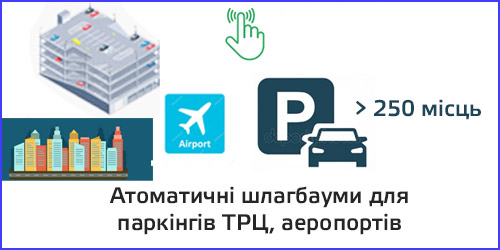
Looking for an automatic barrier to put on the entrance to the yard? Or a garage cooperative? Maybe it is necessary to block access to the cottage town? | Entrances to residential complexes, parking lots, where the frequency of use can be maximum, but on the condition that no more than 250 cars use the parking lot |
 |
|
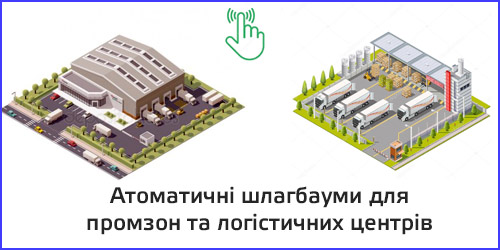
| Do you need to organize access to large parking lots, where cars enter and exit daily and every minute? | Logistics centers, production and industrial zones are always wide entrances |
 | |
| Need super speed to get through heavy traffic without creating a traffic jam at the entry control? Automatic barriers for toll roads can easily cope with any super-task |
Step-by-step guide to choosing a barrier:
how to choose an automatic barrier 1. Decide on an acceptable budget (the barrier can cost from 570 euros to 7800 euros for the barrier itself without additional equipment)
2. Choose the length of the barrier boom - it should be 25-50 cm longer than the passage width
3. Choose the intensity of the barrier
4. It is determined with the method of controlling the barrier - remote control, phone, card
5. Order, installation and adjustment of the barrier.
The benefits that the AUTOMATIC BARRIER brings can hardly be overestimated. For courtyards of residential buildings, these are free parking spaces, which otherwise can be occupied by cars of offices and institutions located in the neighborhood. For shopping centers, shops, restaurants - this is the use of parking spaces for their intended purpose - by visitors. For office buildings - the availability of free parking spaces for staff and customers, and not cars from neighboring houses. In the end, barriers put everything in its place - cars park where they arrived and where they are expected.
A huge range of applications, high functionality, accessibility, giving the entrance a new modern look, durability, ease of use, saving time, solving one of the most urgent tasks - organizing access to the territory - all this makes the barrier a necessary attribute of a modern city.
Cost calculation
At present (beginning of 2010) the average cost of a high quality barrier with a 4m boom operated by a remote control is 1000 euros. Preparation for installation and the installation of the barrier itself is about 20% of the cost. Total turnkey barrier costs about 1200 euros. Given that the service life of the barrier is at least 3 years. Then the cost per day for this automatic miracle will be 1 euro! This is if the company buys the barrier. If the barrier is purchased for use in the yard by the residents of the house (for example, 20 residents), then the cost per day will be 0.05 euros - at the current exchange rate, this is 60 kopecks per day. And one kopeck per day for using the remote control (with the cost of the remote control 25 euros). It is this accessibility that brings the barrier to the forefront in organizing effective parking, which brings with it convenience and pleasure.
First step: Choosing the length of the barrier boom
It is easy to determine the length of the barrier - just measure the width of the opening that needs to be blocked. The smaller the passage, the less the automatic barrier will cost. With a width of 14 m, it will not be possible to block the passage with one barrier, in this case two barriers are used to block the passage, which are installed on both sides of the passage.
If we are talking about an ordinary courtyard, in which there is no security guard or video surveillance, then the vandal resistance of the barrier comes to the fore. Experience shows that the boom of the barrier often becomes the object of violence of some of our fellow citizens. In these cases, do not worry - you can always replace the arrow. In such situations, the level of service of the company that installed the barrier is very important.
Also, when determining the length of the barrier boom, it is necessary to take into account the convenience for the passage of pedestrians, and when determining the installation location, the convenience of supplying voltage. To resolve these issues, you can call the wizard on the object.
Second step: Selecting the required barrier intensity
After you have decided on the length of the barrier, you need to determine how intensively the equipment should work. The intensity of the barrier is defined as a percentage. The intensity of 50% for the barrier means that for normal operation without overheating of the drive during any arbitrarily chosen 10-minute time interval, the boom should move no more than 5 minutes, and the rest of the time it should be at rest. Let, for example, the boom lifting time be 5 s, and the full opening-closing cycle be 10 s. Then it is painless to make the barrier boom go up and down no more than 1 time in 20 seconds or no more than 30 times in 10 minutes. If the boom works 2 times slower, then in 10 minutes not 30, but only 15 lifting-lowering cycles are allowed. Thus, the choice of the required intensity of equipment operation is determined by the estimated number of arrivals and departures in 10 minutes. More frequent use than stipulated by the manufacturer is irrational, because it can cause a breakdown in the operation of the barrier and increased wear.
The opening time of a conventional barrier in seconds, as a rule, is numerically equal to the length of the boom in meters. Knowing this, it is possible to approximately estimate the required intensity of equipment operation.
We recommend purchasing barriers with an overestimated intensity in order to avoid equipment failure when the load on the barrier increases (for example, with an increase in the flow of cars in the future).
Third step: Choice of control method, safety elements and accessories.
The length of the barrier boom and the intensity are set, now it is necessary to select the way to control the barrier and the security elements.
The barrier can be controlled:
1. Remotely - using remote controls (this additionally requires a radio receiver board, an antenna and, in fact, remote controls),
2. Remotely, using the Hands Free system (Free Hands), which opens the barrier when a car enters it. In this case, you do not need to take any action - there is an active card in the car, which itself gives a signal to open and close the barrier.
3. Contactless access - using proximity cards or magnetic cards that must be brought to the reader
4. By wire - using a button, a key or a code keypad.
To improve safety, it is recommended to install a signal lamp and safety photocells that do not allow the boom to go down if the car stops under the barrier boom. It is also recommended to apply reflective stickers and rubber pads to the barrier boom.
It is necessary to imagine that barriers are electromechanical and electrohydraulic. In theory, a hydraulic drive should be more reliable than an electric drive, but for the Ukrainian winter, an electromechanical barrier is the most suitable. Since the oil becomes more viscous in cold weather, which means that, at a minimum, seasonal adjustments of the hydraulic pump bypass valve cannot be dispensed with. Practical experience shows that the electromechanical drive has better performance characteristics and is much more adapted to low temperatures.
The power mechanism of electromechanical barriers contains an electric motor, a gearbox and a balancing spring. The LEMUS barrier range includes only electromechanical barriers.
Fourth step: Installation and adjustment of the barrier
A step that should be taken very seriously. Because only a well-executed installation can guarantee trouble-free operation of the barrier during the entire service life! The recommendations here are the usual: it is advisable to place your order in a company with a good reputation and a long history of work.
2.10.2009


