Automatic bollards with the function of immersion under the asphalt - Lemus Ukraine
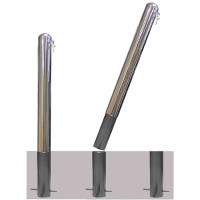
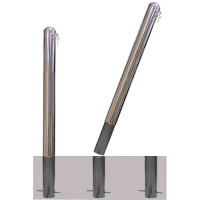
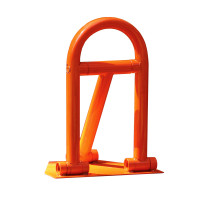
Automatic bollards are an effective solution for access control and traffic management. These devices, installed on the road or entrance, are able to rise and fall, providing control of the passage of vehicles.
One of the main advantages of automatic bollards is their high degree of safety. Due to the robust construction and the use of special materials, the bollards are highly resistant to impact loads and are also protected from unauthorized passage. This allows you to effectively control access and prevent unauthorized entry into protected areas.
We installed FAAC J275 stainless steel bollards on Zemlyansky Lane in Kyiv and filmed a video showing how well they correspond to the raise-lower time parameters declared by the manufacturer. The results, as well as the work of the bollards, look at the video:
If you are interested in how automatic posts, bollards are installed, then watch this video of ours. Here we install a bollard at the entrance to the courtyard of a residential building in Kyiv on Lipskaya Street.
another video showing the lowering of automatic bollards by O&O DAKOTA, we also installed such bollards on Hrushevsky in Kyiv
(Photo: Lemus archive, 2009)
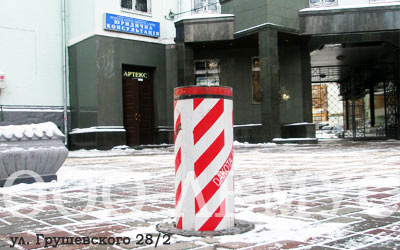
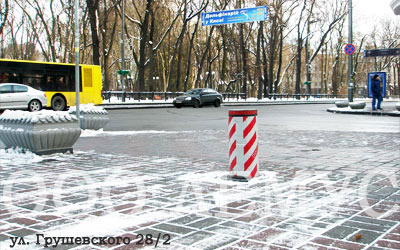
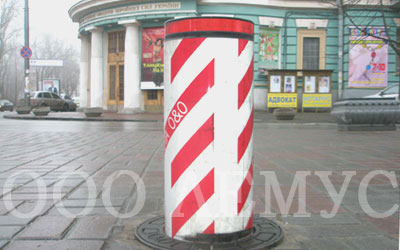
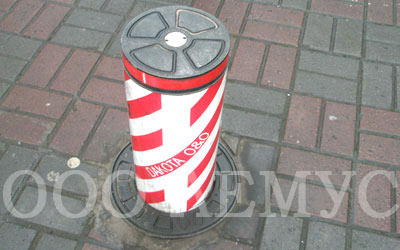
Automatic bollards have a wide range of applications. They can be used at the entrances to office buildings, shopping centers, parking lots, airports and other public and commercial facilities. Bollards are also used to organize traffic in urban areas with limited access, pedestrian areas or on highways to control the passage of cars.
It is important to note that automatic bollards can be integrated with other security and access control systems. This allows you to create a comprehensive solution for security and efficient traffic management.
In today's world where security and access control are becoming increasingly important, automatic bollards are an integral part of the infrastructure of cities and commercial facilities. They provide effective control and security, prevent unauthorized access and increase the level of protection.
One of the important advantages of automatic bollards is their aesthetically pleasing design. Thanks to the use of modern materials and technologies, bollards can be harmoniously integrated into the environment and the architectural appearance of objects. This allows you to maintain the aesthetic appeal of the place and create a favorable atmosphere.
In addition, automatic bollards offer high reliability and durability. They are able to withstand heavy use and extreme weather conditions. High quality materials and careful design provide resistance to mechanical stress, corrosion and wear.
Automatic bollards are controlled by special control and access control systems. Operators can easily control the bollards using a remote control, computer programs or mobile applications. This allows you to quickly respond to changing conditions and adjust access in real time.
Interesting videos with bollards from Internet resources:
See how the function works when 4 bollards plunge at the same time. In the video - a row of bollards, and notice when the car leaves, 4 bollards are lowered, and at that time 4 bollards are raised behind it. Looks very impressive.
In this video, we have shown how bollards can control exit and be used in conjunction with a traffic light. This can be easily implemented and may be what you need.
An important aspect of using automatic bollards is their economic efficiency. They allow you to optimize the use of parking spaces, control the number of passing vehicles and prevent incorrect parking. This reduces maintenance and parking management costs and improves overall traffic flow.
In conclusion, CAME automatic bollards are reliable, efficient and safe solutions for access control and traffic management. Their use allows to ensure safety, aesthetic appeal and economic efficiency in parking lots, protected areas and other places with limited access. Due to their reliability, durability and ease of use, CAME automatic bollards are in great demand among owners of commercial and public facilities.